A load sitting uncovered for 30 minutes in a tight market is a problem. Sitting uncovered for two hours is a shipper relationship at risk. And a load that goes to a competitor because your team was still tracking down a carrier is revenue you will not get back.
Load coverage speed is one of the clearest dividing lines between brokerages that grow and ones that stay stuck. The fastest-growing brokerages in the country are not just working harder. They have built systems, habits, and technology that let them cover freight faster than everyone else in the market.
This post breaks down exactly what those brokerages do differently, the strategies behind their speed advantage, the benchmarks worth tracking, and how you can start closing the gap starting this week.
Why load coverage speed is the metric your brokerage cannot afford to ignore
In freight brokerage, speed is not just an operational metric. It is a revenue metric.
Research from Global Trade Magazine makes this point with a number that should stop every brokerage operations manager cold: freight brokers respond to less than 10% of the available freight quote requests in shipper TMS portals. The loads are there. The opportunity is there. But slow response times mean those loads go somewhere else.
According to industry analysis on how speed is reshaping freight brokerage, the broker who responds first stays in the conversation. The broker who responds hours later often does not get a response at all. Win rates across the industry range from 2% to 20% depending on the lane and the shipper, but the consistent finding is that speed is a multiplier on whatever win rate a broker already has.
The 2026 freight market adds even more pressure to this. With the DAT load-to-truck ratio spiking and capacity tightening across key lanes, carriers have more options. A slow brokerage is not just losing shipper business. It is also losing the carrier relationships it needs to cover freight when the market gets tight.
100% of freight brokerages lose loads because they cannot quote fast enough. The broker who responds first wins the chance to build the relationship. The broker who responds hours later often does not get a response at all.
The good news is that coverage speed is a fixable problem. It is not about hiring more people. It is about fixing the process and the tools. Here is what the best brokerages in the business have figured out.
What load coverage speed actually means (and how to measure it)
Before fixing it, you need to define it. Load coverage speed measures the time from when a load is posted or tendered to when a carrier is confirmed and the load is covered. That cycle includes:
Time to post the load to your carrier network or load boards
Time for carriers to respond with availability and rate
Time for your team to evaluate, negotiate, and confirm
Time to send the rate confirmation and get it signed
Each step in that cycle is an opportunity to lose time, and lose the load. Most brokerages track individual pieces of this but never measure the full cycle. The brokerages that win on speed track the entire process end to end.
A related metric worth tracking alongside coverage speed is your tender acceptance rate: the percentage of loads your preferred carriers accept on the first tender, without requiring a call, a negotiation, or a fallback carrier. A high tender acceptance rate means your carrier network is well-matched to your freight. A low one means your team is spending time chasing capacity that should already be in place.
What top brokerages do to cover loads faster: 6 strategies that work
These are not theoretical. These are operational habits that separate brokerages covering hundreds of loads per day from ones struggling with the same volume at half the speed.
1. Build a Tiered Carrier Network Before the Load Hits the Board
Reactive carrier sourcing is the number one speed killer. Top brokerages build tiered networks proactively. Tier 1 runs your lanes regularly, Tier 2 are qualified backups, Tier 3 is your spot market fallback. When a load comes in, your system knows which carrier to contact first, second, and third, automatically.
2. Use Automated Load Tendering, Not Manual Outreach
Calling carriers one by one is built for a slower world. Top brokerages use automated tendering through their TMS. The system simultaneously sends the tender to Tier 1 carriers via email, text, or portal, captures responses, and automatically cascades to the next tier if no response comes within your defined window.
3. Use Lane Data to Predict Coverage Problems Before They Happen
The best brokerages are proactive planners. They use historical lane data to identify which lanes are difficult to cover, which days spike, and which shippers have the highest rejection rates. They lock in commitments from carriers on high-risk lanes a week or more in advance, before the scramble begins.
4. Make It Easy for Carriers to Do Business With You
Load coverage speed is a carrier problem too. If working with your brokerage requires filling out lengthy onboarding paperwork or chasing payment, that carrier will choose a simpler option next time. Top brokerages offer self-service carrier portals, pay quickly, and use integrations that let carriers engage on their terms.
5. Track Coverage Metrics by Lane, by Carrier, and by Rep
If you do not measure coverage speed, you cannot improve it. Top brokerages monitor average time to cover by lane, first-tender acceptance rate by carrier, coverage attempts per load, and broker rep efficiency. These numbers point directly to where the fix needs to happen.
6. Use AI to Match Loads With the Right Carrier Instantly
AI-powered load matching evaluates carrier location, equipment availability, lane history, performance scores, and current market rates in seconds. Dispatchers see the top three carrier matches the moment a load enters the system, confirming in seconds instead of spending 20 minutes on the phone working through a mental rolodex.
How the right TMS turns coverage speed into a competitive advantage
Every strategy in this post requires one thing to work at scale: a TMS that is built for speed.
Brokerages running on disconnected tools, spreadsheets, and email threads cannot execute tiered carrier tendering, lane-level performance tracking, or AI load matching. The operational overhead of manual coordination eats every efficiency gain before it can compound.
A modern freight broker TMS connects your carrier network, load board integrations, rate data, tracking, and billing into one system where each part feeds the next. When a load comes in, the system knows your carrier tiers, your lane history, your current market rates, and your preferred carriers’ availability. It does the matching work before your dispatcher has to think about it.
For brokerages looking to close the coverage speed gap quickly, here is what to look for in a TMS:
Automated Waterfall Tendering
Loads go to Tier 1 carriers first, then cascade to Tier 2 and Tier 3 based on response time windows you define.
Lane Performance Dashboards
See coverage time, tender acceptance rate, and carrier performance by lane in one view.
Carrier Portal and Digital Onboarding
Fast and frictionless for carriers to work with your brokerage. No phone tag required.
AI Load Matching
Surfaces the best carrier for each load based on live data, not dispatcher memory.
Real-Time Shipment Visibility
Keeps your shippers informed without your team manually checking in on every load.
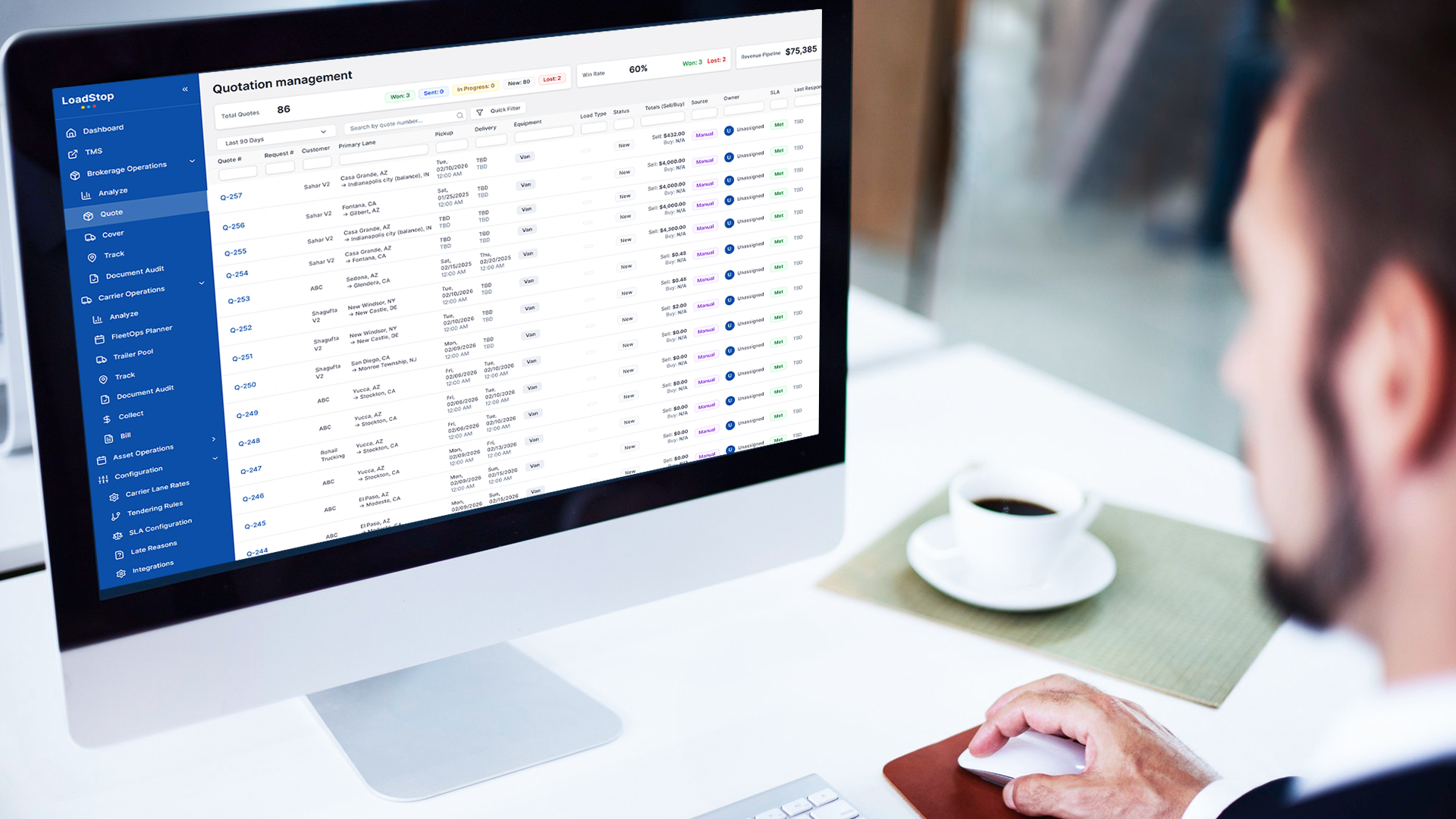
LoadStop’s AI Cover brings all of these capabilities together in a platform purpose-built for broker speed. It uses AI to automatically identify the best-fit carrier for each load, sends automated tenders, tracks responses, and keeps the coverage cycle moving without manual intervention at every step. Brokers using AI Cover report faster first-tender response times and higher coverage rates across their carrier networks.
For a deeper look at how dispatch automation works at the operational level, read our guide on how LoadStop uses AI to automate dispatch for carriers and brokers.
And if you want to understand how real-time visibility keeps your shipper relationships intact while your team covers freight faster, see our breakdown of how real-time load tracking turns visibility into shipper trust.
Load coverage benchmarks your brokerage should know
Knowing where you stand against the market helps you prioritize where to focus. Here are the benchmarks top-performing brokerages operate against.
Time to cover: Top-performing brokerages cover most truckload shipments within 15 to 30 minutes of posting. Average brokerages take 1 to 3 hours. Brokerages still operating on primarily manual processes can take 4 hours or more on difficult lanes.
First-tender acceptance rate: A well-managed carrier network should be hitting 70% or higher on first-tender acceptance for recurring lanes. Below 50% is a signal that your carrier network is not well-matched to your freight mix, or that your rates are consistently off-market.
Loads covered per broker per day: According to research on TMS adoption, brokerages using modern automation tools report a 2 to 3x increase in load coverage per employee compared to those relying on manual processes. A rep at a well-automated brokerage should comfortably cover 20 to 40 loads per day. Manual-process reps typically max out at 10 to 15.
Digital coverage rate: Top brokerages are targeting 25 to 35% digital freight coverage, meaning loads that are tendered, accepted, and confirmed without any phone calls. This number is growing as carrier technology adoption increases.
Brokerages using modern TMS tools see a 2 to 3x increase in loads covered per employee. The math is simple: double your coverage speed and you either handle double the volume with the same team, or you cut your team cost in half.
The fastest brokerage in the room wins the freight
The freight market rewards speed. Shippers remember which broker covered their load when everyone else was still making calls. Carriers prioritize the brokers who move fast, communicate clearly, and pay on time. And the brokerages that build coverage speed into their operations, not as a goal but as a system, are the ones adding load volume without adding headcount.
The six strategies in this post are not complicated. Building a tiered carrier network, automating your tender workflow, using lane data to stay ahead of coverage problems, making life easy for carriers, tracking the right metrics, and using AI where it adds the most speed. Each one is actionable. Taken together, they build a brokerage that moves faster than the competition every single day.
Start with one. Audit your current first-tender acceptance rate. If you do not know the number, that is the first problem to fix. Everything else follows from there.
FAQs
Share
Trending Articles
Get a daily dose of industry insights, tips, and updates to keep you informed and inspired.