

Truckload carriers are under pressure from every direction.
Insurance is expensive. Maintenance is expensive. Labor is expensive. Equipment is expensive. Fuel may swing down one quarter and spike the next. Meanwhile, dispatchers, accounting teams, safety teams, and fleet managers are expected to move faster with the same office headcount.
ATRI's 2025 operational cost update found that the average cost of operating a truck in 2024 was $2.260 per mile. Excluding fuel, marginal costs rose to $1.779 per mile, the highest non-fuel operating cost level ATRI had recorded. Greg Hodgen, President and CEO of Groendyke Transport, described the market as "loads down and costs increasing."
That is why admin work matters.
A dispatcher copying load details from a load board may not look like a major cost. A billing clerk chasing one POD may not look like a profit leak. A settlement specialist reconciling fuel, tolls, deductions, and driver pay in spreadsheets may feel normal.
But across hundreds or thousands of loads, those repeated tasks drain margin.
The real problem is not always that carriers lack people. It is that their systems do not talk to each other.
Modern TMS integrations like LoadStop connect the systems carriers already rely on: load boards, ELDs, accounting tools, fuel cards, toll providers, factoring partners, driver apps, visibility platforms, maintenance systems, onboarding tools, and document workflows.
LoadStop brings those workflows into one AI-First TMS, helping fleets reduce manual data entry, speed up dispatch, improve billing accuracy, and run more freight without adding office staff at the same pace.
For many carriers, cutting admin time by 40% is a realistic benchmark to pursue. Not as a guaranteed software claim, but as a practical goal built from workflow automation, fewer duplicate entries, faster document handling, cleaner accounting sync, and better exception management.
Carrier Pain Points and LoadStop Solutions
| Carrier Pain | Problem It Creates | How LoadStop Solves It |
|---|---|---|
| Load details copied from emails and boards | Slow load creation and errors | AI-assisted rate confirmation ingestion and load creation |
| Dispatchers switching between portals | Lost time and missed updates | ELD, GPS, visibility, and dispatch data in one workflow |
| Billing waits on paperwork | Delayed invoices and cash flow | POD collection, document automation, and invoice automation |
| Settlements require spreadsheets | Driver pay questions and rework | Settlement automation tied to load, fuel, toll, and pay rules |
| Accounting re-enters TMS data | Duplicate work and reporting delays | TMS accounting integration with common accounting systems |
| Managers lack real-time visibility | Reactive decisions | Reporting, workflow visibility, and exception alerts |
Connected systems stop the admin bleed, one clean load record moves from booking to cash.
What are TMS Integrations?
A TMS integration is a connection between your transportation management system and another business tool, which lets your systems exchange data automatically instead of forcing your team to copy, paste, download, upload, rename, retype, and reconcile the same information over and over again.
For carriers, transportation management system integration usually touches the full load lifecycle:
Common Integration Methods
Common TMS Integration Methods
| Integration Method | How It Works | Common Use Cases |
|---|---|---|
| API integration | Two systems exchange data directly, often in near real time | ELD location sync, load board sync, accounting sync |
| EDI integration | Standard business documents move electronically | Tenders, shipment updates, invoices, and customer requirements |
| FTP or SFTP | Files move securely between systems on a schedule | Factoring files, fuel transactions, toll files |
| CSV import/export | Structured data moves in spreadsheet format | Fuel surcharge data, reporting, and one-off data transfers |
| Email-based workflow | Documents or data are routed by email rules | Factoring packages, documents, and exceptions |
| AI data extraction | AI reads documents and pulls key fields | Rate confirmations, PODs, BOLs, receipts, invoices |
A strong integration strategy doesn't just move data, it improves workflow.
"A strong trucking software integration strategy does not just move data. It improves workflow."
Why Admin Work Eats Carrier Margins
Admin work becomes expensive when every department touches the same load data.
A single shipment may move through dispatch, tracking, billing, accounting, compliance, settlements, customer service, and management reporting. If each team has to re-enter or verify the same information, the cost multiplies.
Descartes' 2025 Global Transportation Management Benchmark Survey of more than 600 companies found that 81% of shippers and logistics service providers view transportation management as a differentiator or competitive weapon. Yet only 17% said they were fully automated, and more than one-third were heavily or mostly reliant on manual processes.
That gap shows up inside carrier operations every day.
Where Admin Work Leaks Carrier Margin
| Workflow | Manual Admin Leak | Business Impact |
|---|---|---|
| Dispatch | Re-entering pickup, delivery, rate, broker, and reference data | Slower load creation and higher error risk |
| Tracking | Check calls, portal switching, and manual customer updates | Less dispatcher capacity |
| Billing | Waiting on PODs, lumper receipts, and accessorial backup | Slower cash flow |
| Accounting | Re-keying invoices, payments, and expense data | Duplicate data entry and reconciliation issues |
| Settlements | Manual driver pay calculations and deductions | Driver disputes and payroll delays |
| Compliance | Chasing documents, HOS details, and safety records | Audit risk and management distraction |
| Customer service | Answering status requests manually | More emails, calls, and interruptions |
When data moves automatically, people stop chasing it, and manage more freight.
The hidden cost is not just time.
Manual data entry creates errors. Errors create rework. Rework delays cash. Delayed cash tightens the operation. And when managers cannot trust their data, they make decisions late.
That is why reducing admin work starts with connected systems, not just more spreadsheets.
How TMS Integrations Cut Admin Time
Connected systems reduce admin time by making one clean load record the source of truth.
Instead of entering data in the load board, TMS, driver app, ELD portal, customer portal, accounting software, settlement spreadsheet, and factoring system, your team manages the shipment through one connected workflow.
A 40% admin time reduction target usually comes from stacking multiple improvements:
Load data enters the TMS once, load board details, rate confirmations, customer data, charges, stops, and references flow in without repetitive typing.
Dispatch details move automatically, driver assignments, pickup information, delivery details, and special instructions flow to the driver app.
Tracking updates sync from ELD and GPS data, dispatchers do not need to switch portals or make routine check calls.
Documents are attached to the load record, PODs, BOLs, scale tickets, lumper receipts, and accessorial backup stay with the shipment.
Billing starts faster, once documents are complete, invoice automation generates the invoice from approved load data.
Driver settlements become cleaner, pay rules, load revenue, deductions, reimbursements, fuel, tolls, and trip data feed settlement automation.
Accounting sync reduces rework, invoices, payments, expenses, and settlement data move into accounting software without manual re-entry.
"Think of the 40% benchmark this way: if a carrier spends 100 administrative hours per week, the goal is to remove or compress 40 hours of repetitive work. That happens when the load lifecycle becomes connected from booking to cash."
Not every carrier will see the same outcome. Workflow complexity, load volume, customer requirements, data quality, and team adoption all matter. But the pattern is clear: when data moves automatically, people stop chasing it.
LoadStop Integration Ecosystem: From Load Board to Cash
A carrier TMS should not connect only one tool. It should support the way carriers actually operate.
LoadStop's integration ecosystem includes ELDs, asset trackers, load boards, load posting, factoring, accounting, mileage calculation, fuel cards, tolls, visibility platforms, carrier onboarding, carrier pay, driver onboarding, lumper, maintenance, fuel optimization, and communication workflows. Integration availability, setup requirements, and data depth can vary by partner and implementation.
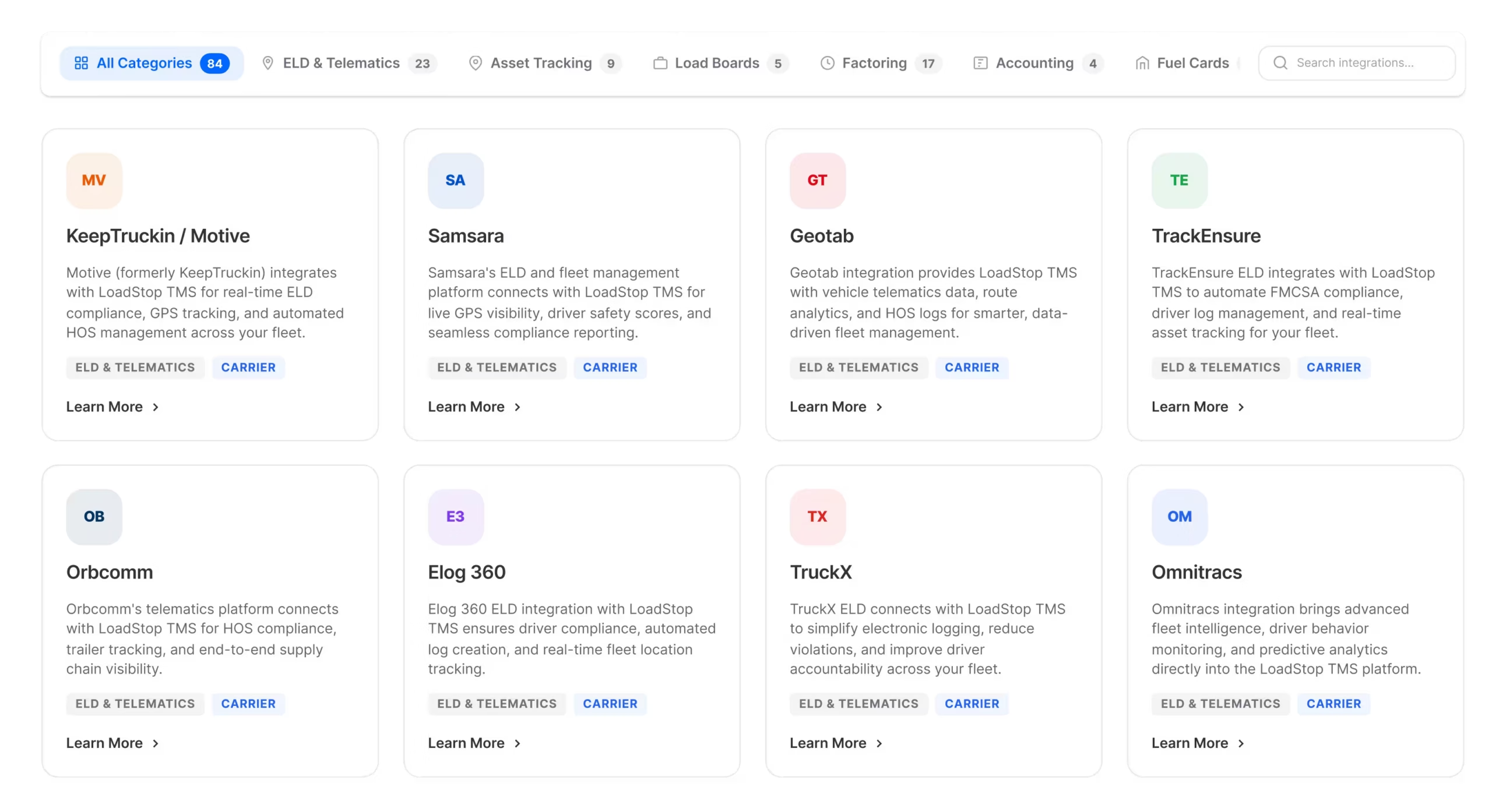
An ecosystem of trusted connected tools matters because admin work is not isolated. A billing delay may start with a missing POD. A settlement dispute may start with a fuel transaction that never matched the trip. A check call may happen because GPS data sits in a separate portal.
13 Integrations That Save Carriers Time
These are the integrations that move the needle most for carrier back-office efficiency.
1. Load Board Integration
Load board integration reduces manual entry at the start of the load. DAT and Truckstop APIs support load board sync, BookNow, load posting, and rate data. Dispatchers move faster from freight search to load creation without copying broker, lane, rate, equipment, appointment, and reference details.
2. ELD Integration
TMS ELD integration connects dispatch with HOS, vehicle, location, and odometer data. FMCSA notes that ELDs automatically record date, time, location, engine hours, vehicle miles, and driver identification. Dispatchers plan with better visibility and spend less time asking 'Where are you?'
3. GPS Tracking and Visibility
Visibility platforms such as FourKites, Descartes MacroPoint, FarEye, and project44 help carriers share milestone updates, check-call data, and dispatch updates without forcing staff to manually update every party. Real-time data sync reduces check call volume.
4. Accounting Integration
A TMS accounting integration can sync invoice, payment, customer, vendor, settlement, and expense data with QuickBooks Online, QuickBooks Desktop, NetSuite, and Microsoft Dynamics GP. Billing and accounting delays directly affect cash flow.
5. Fuel Card Integration
Fuel card integration brings fuel transactions into the carrier workflow. Instead of reconciling fuel in spreadsheets, carriers connect fuel card data to loads, drivers, units, settlements, and reporting, helping with fuel reconciliation, IFTA support, cost review, and settlement accuracy.
6. Toll Integration
Toll integration connects toll transactions to operational and accounting workflows. This reduces the manual work of matching toll statements to trucks, routes, drivers, or loads. It also helps carriers see the true cost of a lane.
7. Factoring Integration
Factoring integration helps carriers prepare faster, cleaner invoice funding submissions. When the rate confirmation, POD, invoice, and load data live together, factoring packages become easier to assemble and submit.
8. Driver App Integration
Driver app integration helps drivers receive load details, upload PODs, send receipts, report exceptions, and communicate with dispatch. Fewer texts, fewer calls, fewer missing documents, and faster delivery-to-billing workflow.
9. Document and POD Automation
Document automation keeps paperwork tied to the right load. POD collection is one of the biggest billing bottlenecks in trucking. When the driver uploads the POD and the system attaches it to the load record, billing moves faster.
10. Invoice Automation
Invoice automation turns approved load, rate, accessorial, and document data into a billing workflow. It does not remove financial control, it gives accounting cleaner data and fewer manual steps.
11. Settlement Automation
Settlement automation helps prepare driver pay using completed loads, pay rules, fuel, tolls, reimbursements, deductions, and documents. Clean settlements reduce driver questions and protect trust.
12. Safety and Compliance
Safety and compliance integrations connect ELD, driver onboarding, maintenance, and compliance-related data. That helps safety teams manage logs, onboarding status, maintenance visibility, and exceptions without chasing data across systems.
13. Customer Portal and Shipper Visibility
Customer portal workflows reduce 'where is my load?' requests. When customers see the right status updates, dispatchers spend less time sending routine emails and more time managing exceptions.
Where AI Adds Value Inside LoadStop
AI is useful when it removes repetitive work while keeping humans in control. Inside LoadStop TMS, AI can help with:
That is where AI-powered trucking workflow automation becomes practical. It is not about replacing dispatchers or back-office teams. It is about helping experienced people move faster, catch errors earlier, and spend less time on low-value admin. AI should support process discipline, it should not become a shortcut around it.
LoadStop Value by Carrier Teams
The gap between connected and disconnected operations shows up differently for each team.
LoadStop Value by Carrier Team
| Team | With LoadStop | Without LoadStop |
|---|---|---|
| Dispatchers | Faster dispatch automation, ELD data sync, visibility, fewer routine calls | Load entry, check calls, driver updates, portal switching |
| Operations managers | Better workflow visibility and load status control | Bottlenecks, exceptions, staff workload, service failures |
| Accounting teams | Accounting sync, invoice automation, document automation | Invoice delays, duplicate entry, missing PODs, and reconciliation |
| Safety & compliance | Connected ELD, onboarding, and maintenance visibility | Missing driver, HOS, onboarding, and maintenance data |
| Drivers | Better mobile workflows and cleaner settlement support | Repeated calls, unclear instructions, document resends |
| Fleet owners | More loads managed without proportional back-office growth | Margin pressure, admin headcount, slow cash flow |
| Overall result | Scalable operations, add trucks without adding the same admin headcount | Admin grows with volume, margins compress |
For executives, the strongest value is scalability: more trucks without proportional back-office growth.
For executives, the strongest value proposition is scalability. Adding trucks should not automatically mean adding the same percentage of dispatch, billing, accounting, and settlement staff. A connected carrier TMS gives the business a more efficient operating model.
How to Choose the Right TMS Integration Partner
The right trucking software integration partner should understand carrier operations, not just software connections. Evaluate vendors using these criteria:
Integration ecosystem Can the platform connect with load boards, ELDs, accounting tools, fuel cards, toll systems, factoring partners, driver apps, and visibility platforms?
API and EDI capabilities Does the system support modern API integration and traditional EDI integration where customers require it?
Carrier-specific workflows A carrier TMS should support dispatch, driver management, settlements, compliance, billing, documents, and equipment workflows.
AI automation features Look for AI that solves real problems: rate confirmation ingestion, document reading, data extraction, exception detection, and suggested next actions.
Load lifecycle coverage The system should cover load sourcing, dispatch, tracking, document capture, billing, settlements, accounting sync, and reporting.
Accounting and settlement support Ask how the platform handles driver pay, deductions, reimbursements, fuel, tolls, accessorials, and financial exports.
Customer support Implementation support matters. So does responsive help after go-live.
Scalability The platform should support growth across more trucks, more users, more customers, and more integrations.
Ease of implementation The best system should improve workflows without creating months of disruption.
Reporting and visibility Managers need clear reporting on productivity, billing speed, exceptions, driver performance, and profitability.
Industry Wins and Notable Outcomes
The measurable wins from connected carrier workflows usually fall into a few categories. Carriers can expect to pursue:
The 40% benchmark comes from stacking multiple workflow improvements. A carrier might cut five minutes from load creation, reduce dozens of check calls per day, speed POD collection, remove accounting re-entry, and automate settlement preparation. Each improvement looks small by itself. Together, they can change the economics of the back office.
The most important shift is in mindset.
Admin time is not just a staffing issue. It is a systems issue.
You Don't Need More Tools & Staff, But a Connected System
Carriers do not need more disconnected tools.
They need one connected operating system that helps dispatch, accounting, safety, drivers, and fleet leaders move faster from booking to cash. That means fewer duplicate entries. Fewer check calls. Faster POD collection. Cleaner invoices. Better settlements. More accurate fuel and toll reconciliation. Stronger visibility. Less administrative overhead.
That is the practical value of TMS integrations.
When your systems talk to each other, your people stop chasing data. When your people stop chasing data, they can manage more freight, serve customers better, and protect margin in a market where every hour counts.
Cut Admin Time With LoadStop Integration Ecosystem
Reduce admin work by connecting everything inside one connected workflow.
Schedule a Demo