
Freight costs never seem to sit still. Fuel, insurance, detention, accessorials, driver pay - everything keeps moving, often in the wrong direction.
Meanwhile, your team is buried in emails, spreadsheets, and TMS tabs just to get today’s loads covered. Margins are thin, service expectations are high, and one disruption can wipe out the profit on a lane for months.
If this sounds familiar, you’re not alone. The real question is: how do you design operations that bend with volatility instead of breaking under it?
That’s where building a resilient, low-cost freight lifecycle comes in - and where AI in freight cost management and automation gives carriers, brokers, and 3PLs a serious edge.
In this guide, we’ll break down:
- What the freight lifecycle in logistics actually looks like
- Where most money gets lost in that lifecycle
- How AI, freight automation, and platforms like LoadStop help you cut costs, grow margins, and reduce potential risks
- Practical steps to modernize your operation without ripping out your TMS
What Is the Freight Lifecycle in Logistics?
Before you can fix cost and resilience, you need a clear picture of the freight lifecycle in logistics.
Think of it as the full journey from “Can you move this load?” to “Everyone’s paid and happy.”
The Core Stages of a Freight Lifecycle
Most carriers, brokers, and 3PLs follow some version of this path:
- Pricing & quoting
- Coverage & carrier procurement
- Load building & data capture
- Dispatch planning & execution
- Tracking, visibility & exception management
- Billing, invoicing & settlement
Each stage has its own cost levers and risk points. If even one is manual, slow, or error‑prone, the whole lifecycle gets more expensive and fragile. Let’s quickly walk through them.
1. Pricing & quoting
This is where revenue starts.
A shipper asks for a rate. Your team digs through emails, rate sheets, load boards, and “tribal knowledge” to decide what to quote.
If you price too high, you lose the load. Too low, and you move freight at a loss.
Manual quoting also eats time. Time your reps could use building relationships or uncovering new business.
2. Coverage & carrier procurement
You’ve won the load. Now you need the right truck at the right buy rate.
Traditional workflows mean:
- Calling or texting carriers one by one
- Posting to multiple load boards
- Managing bids in email threads and sticky notes
It’s slow, easy to miss options, and hard to standardize. Cost control is limited by how much one broker can juggle at once.
3. Load building & data capture
Now you build the load in your TMS or freight management software.
But most load data doesn’t arrive neatly structured. It’s scattered across:
- Rate confs in PDFs
- Accessorial instructions in emails
- Attachments from portals
Humans retype everything. Every manual keystroke is a chance for mistakes that later turn into recons, service failures, or charge disputes.
4. Dispatch planning & execution
Dispatch is where planning meets reality.
Someone must match freight to capacity while considering:
- Driver hours-of-service
- Home time and preferences
- Equipment type and maintenance
- Revenue, margin, and future positioning
Many operations still do this on whiteboards, spreadsheets, or basic routing in a TMS. That’s not enough when you’re managing dozens or hundreds of trucks or loads.
5. Tracking, visibility & exception management
Traditionally, visibility = check calls.
Ops teams chase drivers by phone, check ELD portals manually, and send “Just checking in” emails to customers. This reactive model:
- Burns your team’s time
- Annoys drivers
- Leaves customers in the dark until something is already late
When things go wrong, you often learn about it after the service failure.
6. Billing, Invoicing & Settlement
Finally, you try to get paid and make sure carriers get paid. Billing teams:
- Chase PODs and BOLs
- Match documents to loads
- Validate accessorials
- Build invoices manually
Carriers struggle with brokerage‑specific requirements and factoring rules. Every mismatch or missing document stretches DSO and cash flow, increasing financial stress for everyone.
Why AI in Freight Cost Management Matters Now
You can’t control diesel prices or insurance markets. But you can control internal costs: the time, errors, and missed opportunities buried inside your freight lifecycle.
For years, teams tried to manage freight cost with:
- Manual audits
- After-the-fact spreadsheet analysis
- Gut feeling about lanes and carriers
Useful, but too slow and too limited for today’s volatility.
AI in freight management changes the game because it can:
- Ingest and understand massive amounts of rate, lane, and performance data
- Spot hidden patterns in margin, dwell, accessorials, and carrier behavior
- Recommend the best price or carrier option in seconds, not hours
Combine that with a smart freight automation process, and you go from “we react to problems” to “we design cost and resilience into the lifecycle.” Here’s what AI‑driven freight cost management unlocks:
- Faster, more accurate quoting that protect margin
- Smarter buy rates and carrier choices, not just the cheapest options
- Fewer errors from retyping documents
- Lower overhead per load, so you can scale without bloating payroll
- More stable operations that keep service levels high when markets get ugly
Five Principles of a Resilient, Low-Cost Freight Lifecycle
You don’t get a resilient, low-cost lifecycle just by adding a cool tool. You need a strategy. Here are five principles to anchor that strategy.
1. Think end‑to‑end, not silo by silo
Stop optimizing one department at a time. If quoting is fast but billing is broken, you’re still leaking margin.
Map the full freight lifecycle and treat it as one connected system, from rate request to carrier payment.
That’s the foundation of low-cost freight management that doesn’t collapse under stress.
2. Automate first, escalate exceptions
Your people should not be human APIs.Anything repetitive and rules‑based should be handled by freight automation:
- Extracting data from emails and PDFs
- Building loads in your TMS
- Status updates and notifications
- Matching documents to loads
Humans step in when nuance, negotiation, or relationships matter. That’s how you automate freight process without losing the human touch.
3. Use data and AI to price and procure smarter
AI shouldn’t feel like magic. It should feel like better math. Feed it historical rates, win/loss data, carrier performance, and market feeds. Then let it suggest:
- Target sell rates and floors for quotes
- Smart buy ranges for each lane
- Which carriers are most likely to accept at specific prices
This is where AI in freight management becomes a daily, practical tool, not a buzzword.
4. Design for resilience, not just the cheapest today
Chasing the absolute lowest buy rate every time is risky. Resilience means thinking beyond today’s tender:
- Diversified carrier base, not a single dependency per lane
- Visibility into capacity risk and performance trends
- Playbooks for weather, port, or network disruptions
Sometimes the best long‑term freight cost management decision is paying slightly more to avoid massive failures later.
5. Keep tech lightweight and integrated
If your tech stack adds more complexity than value, costs will creep back in.
Instead of patching together add-ons around an aging TMS, move your freight lifecycle into a single, modern platform.
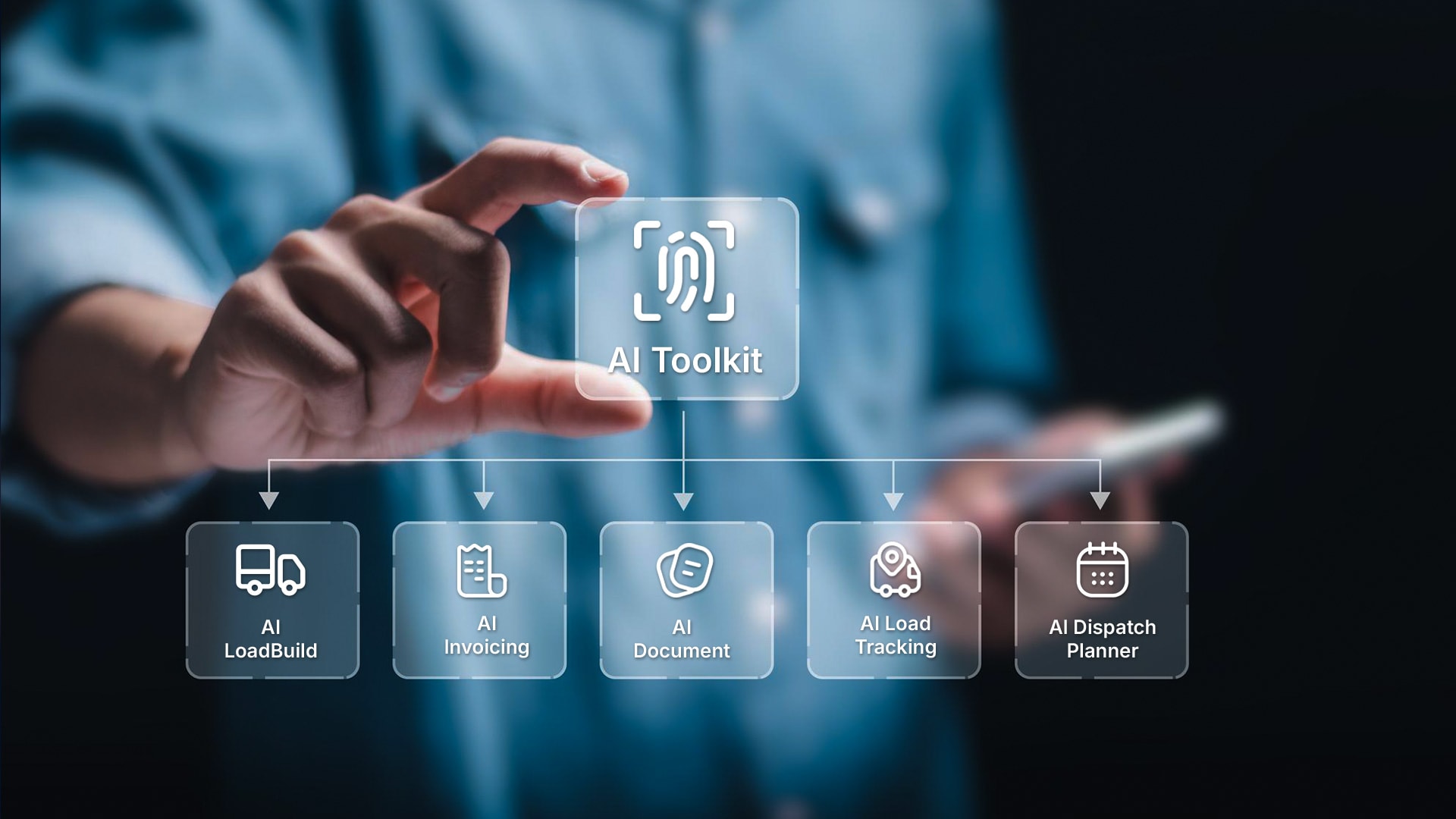
LoadStop gives you that: an AI-driven, integrated freight management system that runs your operation end-to-end - quoting, planning, dispatch, tracking, and billing - so you can cut tools, cut noise, and cut cost at the same time.
How AI Lowers Cost at Every Stage of the Freight Lifecycle
Let’s get practical. Here’s how AI and freight management software like LoadStop reduce cost and build resilience across the lifecycle.
1. Smarter quoting and rate management
In many brokerages, a single quote takes 10–15 minutes of manual work. AI can read the customer email, extract lane and commodity details, pull in market data, and suggest a price in under two minutes. That delivers:
- Faster response times (more tenders won)
- Consistent margin targets across reps
- Less time lost to “spreadsheet archaeology.”
Now your sales team focuses on strategy and relationship building, not rate hunting.
2. AI-powered coverage and carrier procurement
Coverage is usually the biggest bottleneck in the day. AI agents and automation can:
- Reach out to dozens or hundreds of carriers in parallel
- Post and refresh loads intelligently across boards
- Collect, normalize, and rank bids in real time
Your team still negotiates and nurtures carrier relationships. But the outreach and grunt work behind capacity procurement is handled by automation, driving low-cost freight management without burning out your ops team.
3. Automated load building from unstructured documents
Unstructured data is a quiet killer of margin. Every time someone retypes a PDF rate confirmation into your TMS, you risk:
- Wrong addresses
- Missed accessorials
- Incorrect appointment times
With LoadStop, AI reads emails, PDFs, Excel files, and more, then builds TMS‑ready loads automatically. You slash manual data entry time and reduce painful downstream issues like OS&D, recons, and delayed invoices.
4. Profit-driven dispatch planning
Traditional routing focuses on the shortest miles. Resilient, low‑cost operations focus on profit per truck per day. AI‑powered dispatch planning helps you:
- Evaluate the true profitability of each load
- Factor in deadhead, next‑load positioning, and driver preferences
- Stay compliant with HOS while protecting home time
Instead of asking “What can I put on this truck right now?” you’re asking “What sequence of loads will maximize revenue and retention over the week?” That’s where a modern freight management system earns its keep.
5. Predictive tracking and exception management
Manual check calls are a hidden tax on your team. By integrating ELDs, telematics, and visibility platforms into one view, AI can:
- Detect unusual dwell times or route deviations
- Recalculate ETAs based on traffic and weather
- Trigger proactive alerts to customers and internal teams
The result:
- Fewer missed appointments
- Less time spent chasing updates
- More trust from customers who feel informed, not left guessing
This resilience in action makes sure issues get handled before they explode.
6. Automated billing, invoicing, and cash flow
Settlement is where many operations quietly lose money. AI and automation can:
- Match PODs, BOLs, and rate confs to the right load instantly
- Validate all accessorials against agreements
- Generate and send invoices as soon as delivery is confirmed
On the carrier side, a guided portal can build compliant invoices automatically based on load data. You get:
- Shorter DSO
- Fewer disputes
- Happier carriers who get paid on time
A healthier cash cycle makes your entire operation more resilient.
Step-by-Step: How to Automate the Freight Process
Building this future doesn’t have to be overwhelming. Here’s a practical roadmap to automate freight process without blowing up your operation.
Step 1: Map your current freight lifecycle
Get your leaders from pricing, ops, and finance in a room. Whiteboard your true, messy process:
- How a rate request becomes a quote
- How coverage happens
- How loads are built and dispatched
- How tracking, billing, and carrier pay work
Note who touches what and where handoffs fail.
Step 2: Identify your highest cost and risk hotspots
Look for stages where you see:
- Lots of manual data entry
- Frequent errors or disputes
- Long cycle times (quotes, billing, carrier pay)
- Heavy dependence on a few “heroes” who know how things really work
These are prime candidates for targeted freight automation.
Step 3: Fix your data foundation
AI is only as good as the data feeding it. Make sure:
- Lane, customer, and carrier data are clean and consistent
- Status codes and event types are standardized
- Core financial data (rates, accessorials, margins) is reliable
If you’re integrating LoadStop, this is where their team helps align your data with their AI models.
Step 4: Start with one or two high-ROI use cases
Don’t try to boil the ocean. Common quick wins:
- AI‑assisted quoting and pricing
- Automated load building from emails and PDFs
- Proactive tracking and ETA notifications
Prove value, build confidence, and let your team see how AI helps rather than replaces them.
Step 5: Expand to a full, AI-enabled freight lifecycle
Once the first use cases are humming, gradually connect the rest:
- Coverage and bidding automation
- AI dispatch planning
- Automated billing and carrier invoicing
This is where you move from isolated tools to a truly integrated, low-cost freight management lifecycle.
Step 6: Measure, refine, and repeat
Set clear KPIs:
- Quote turnaround time
- Margin per load or per truck per day
- Manual touches per load
- DSO and carrier payment speed
Platforms like LoadStop surface these metrics so you can keep tuning your operation over time.
Choosing a Freight Management System That Actually Reduces Cost
Not all tech is created equal. If you’re serious about resilience and cost, you need more than a shiny UI. Here’s what to look for in freight management software and partners.
1. Modernization, not more patchwork
Running freight on a legacy TMS plus a pile of bolt-ons is risky and expensive. LoadStop becomes your primary operating system for logistics:
- Runs your entire quote-to-cash lifecycle in one platform
- Connects directly to your accounting, visibility, and telematics tools
- Replaces fragile workarounds with automated, AI-driven workflows
You simplify your tech stack, cut the total cost of ownership, and get modern capabilities in a single move with LoadStop.
2. Automation that matches real workflows
Ask vendors to show:
- How they handle your actual document formats and email styles
- How many steps in your current flow can they automate
- Where humans stay in the loop for approvals or edge cases
If it only looks good in a demo, it will fail under real freight.
3. AI built by people who understand freight
You want a partner who has lived your problems.
LoadStop’s approach is shaped by teams with deep industry experience, so features are designed around real brokerage and carrier workflows, not just generic software patterns.
That difference shows up in the details: which metrics they track, how they treat exceptions, and how they think about quote‑to‑cash.
4. A long-term partnership, not a one-time sale
Resilient, low-cost operations aren’t built in a single go‑live. Look for:
- Implementation that respects your current realities
- A success team that helps you prioritize and adopt features
- Ongoing optimization, not just ticket‑based support
You’re not buying a tool; you’re choosing a long‑term lever for competitiveness.
Building Your Resilient, Low-Cost Freight Lifecycle
Freight will probably never get “easy.” Markets will keep shifting. Costs will keep climbing. But your operation doesn’t have to absorb all that chaos.
By treating your quote‑to‑cash process as one connected system, automating repetitive work, and using AI in freight cost management to make smarter pricing and procurement decisions, you can build a freight lifecycle that is both low‑cost and resilient.
LoadStop helps carriers, brokers, and 3PLs get there faster with an AI-driven, end-to-end freight platform that runs the entire lifecycle from quote to cash in one place. Instead of patching more tools onto old systems, you streamline everything into a single, modern operating system for your freight.
The next step is simple:
Map your current lifecycle, pick one or two high‑impact areas, and start experimenting with modern, end-to-end AI‑native solutions like LoadStop.
Small, targeted changes that compound over time and turn into a freight operation that weathers volatility, protects margins, and frees your team to focus on what humans do best: relationships, strategy, and growth.