
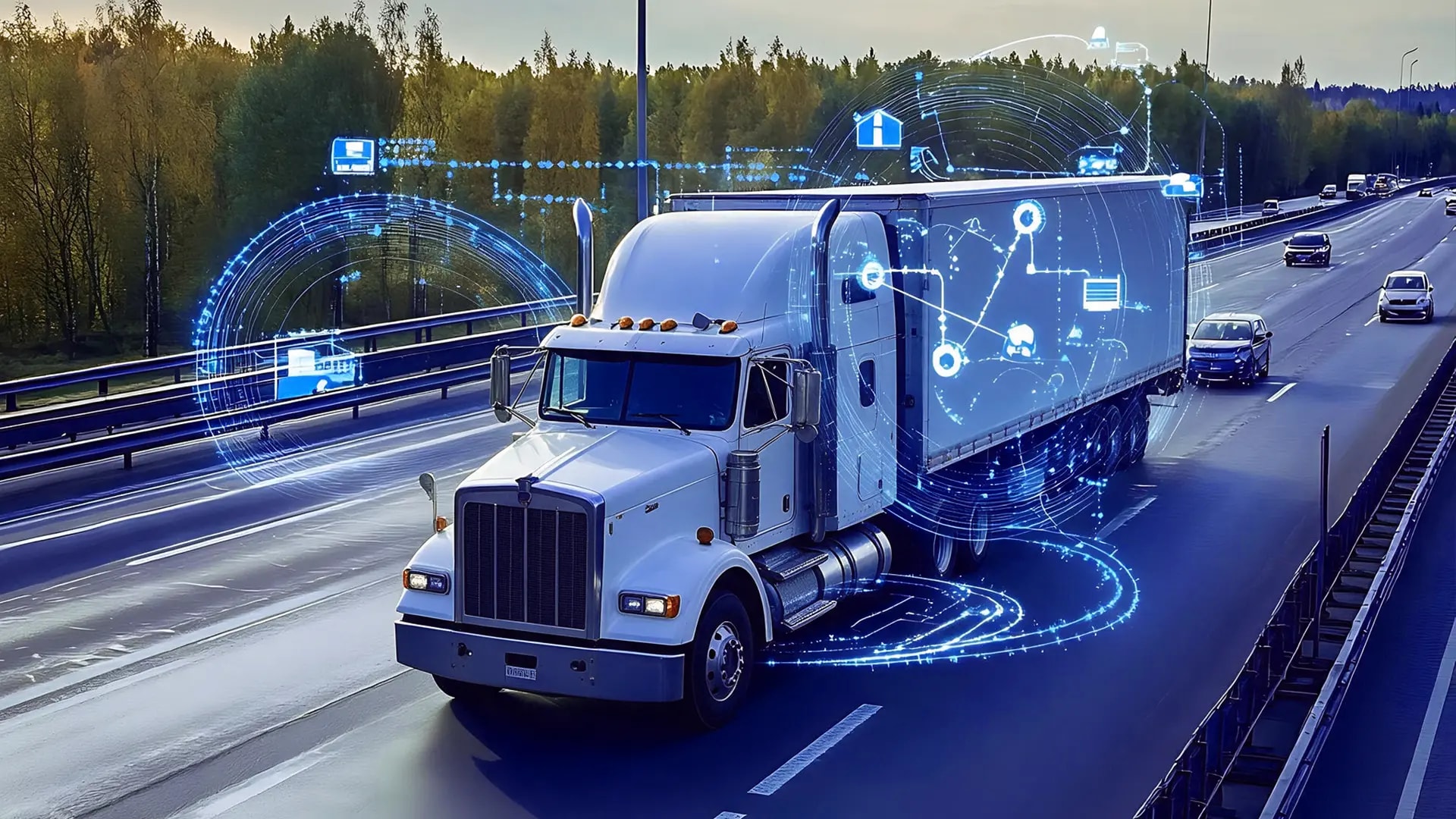
FMCSA and NHTSA's Large Truck Crash Causation Study found that driver-related factors were the critical reason behind 88% of crashes involving a large truck, and driver fatigue alone accounted for roughly 13% of them.
Neither number is about bad drivers. Both are about how much a fleet actually knows, in real time, about hours behind the wheel, vehicle condition, and driver behavior before something goes wrong instead of after.
That's the gap fleet visibility is supposed to close: driver hours, truck location, vehicle health, and compliance status, connected into one workflow instead of scattered across an ELD app, a maintenance binder, and a dispatcher's memory.
What fleet visibility actually means
Fleet visibility gets treated as a synonym for GPS tracking, and that undersells it by a lot. A dot on a map showing a truck is somewhere on I-80 doesn't tell a safety manager anything useful by itself. Real fleet visibility means seeing, in one place:
Driver hours of service and how close a driver is to a violation
Truck and trailer location relative to appointment windows, the same location data behind real-time load tracking for shippers
Unsafe driving events: harsh braking, speeding, distracted driving
Vehicle maintenance status and open DVIR defects
Load status and detention risk
Compliance exceptions that need a human decision, not a spreadsheet nobody opens
None of this requires watching drivers through a keyhole. A driver who gets an early heads-up that traffic is going to blow a delivery window has been helped, not tracked. Connecting this data is about catching problems while they're still small: a defect that got flagged but never fixed, an HOS margin that's thinner than dispatch realizes, a detention clock running long.
Fleet Visibility: Six Data Streams, One Dashboard
of Service
Location
Events
Compliance Dashboard
DVIR Status
Status
Exceptions
LoadStop · Fleet Visibility for Safety & Compliance
The 2026 CSA overhaul raised the stakes
FMCSA's Safety Measurement System scores every carrier across seven categories using inspection and crash data from the past 24 months, and crossing an intervention threshold in even one category puts a carrier in line for a warning letter or a compliance review. FMCSA tracks that performance from the day a carrier registers through the life of the business, drawing on roadside inspections, investigations, and crash reports, the same HOS and duty-status data an ELD integration feeds into day to day.
The system changed in a real way in 2026: Vehicle Maintenance split into two separate categories, one for shop-detected defects and a new one scoring the quality of a driver's pre-trip walk-around, and roughly 950 individual violation codes got consolidated down to about 116 grouped categories. Two thresholds now matter most: 65% for the categories tied most tightly to crash risk (unsafe driving, hours-of-service, crash history), and 80% for the rest.
A single bad roadside inspection can move a fleet's percentile now. A carrier with no system watching HOS compliance and DVIR quality between inspections often finds out its score slipped when the warning letter shows up, not before.
Where the connections actually pay off
A dispatcher managing forty trucks can't manually cross-reference an ELD dashboard, a maintenance spreadsheet, and a load board every hour of every shift. Centralizing this data isn't about a more impressive-looking dashboard. It's about catching what one person, working from memory and four browser tabs, physically cannot catch in time.
HOS and dispatch. A driver with two hours left on the clock and a three-hour run ahead is a scheduling decision, not a surprise, when dispatch can see remaining hours before the load gets assigned. At most carriers today, that math still happens in someone's head.
Maintenance and dispatch. A truck carrying an open DVIR defect shouldn't leave the yard on a 900-mile run without someone looking at it first. Tying maintenance alerts to the dispatch board turns that into a decision made on purpose.
Driver behavior and coaching. Harsh braking and speeding alerts only help if they turn into a short coaching conversation instead of sitting unread in a monthly report. Drivers disengage fast from a system that only shows up at review time, and that disengagement is one of the quieter reasons behind driver turnover, something LoadStop's own look at driver retention strategies gets into in more depth.
Detention and customer updates. A truck sitting two hours past its appointment is a detention claim in progress. Geofencing and automated check calls catch that as it happens instead of relying on a driver to remember to call it in, feeding the same real-time tracking layer that keeps shippers updated without a phone call.
Disconnected vs. Connected Fleet Workflow
Disconnected
Connected
HOS status
Maintenance & DVIR alerts
Automated check calls
Dispatch decisions made with full context
One
Connected
Workflow
LoadStop · Fleet Visibility for Safety & Compliance
Why LoadStop is built to close this gap
LoadStop connects ELD data, real-time load tracking, driver visibility, geofencing, automated check calls, and AI-assisted dispatch into a single workflow, so a safety or compliance manager isn't stitching together three separate logins to answer one question about one truck. HOS status, maintenance alerts, and compliance exceptions surface in the same place dispatch is already working.
That matters for drivers too. HOS-aware load assignments mean fewer trips that quietly set a driver up to run out of hours. Fewer surprise check-in calls mean fewer interruptions during a shift. And when a roadside inspector asks for documentation, it's already sitting in the system.
LoadStop Features → Safety & Compliance Outcomes
Feature
Outcome
LoadStop · Fleet Visibility for Safety & Compliance